A Combined MACD and RSI Strategy
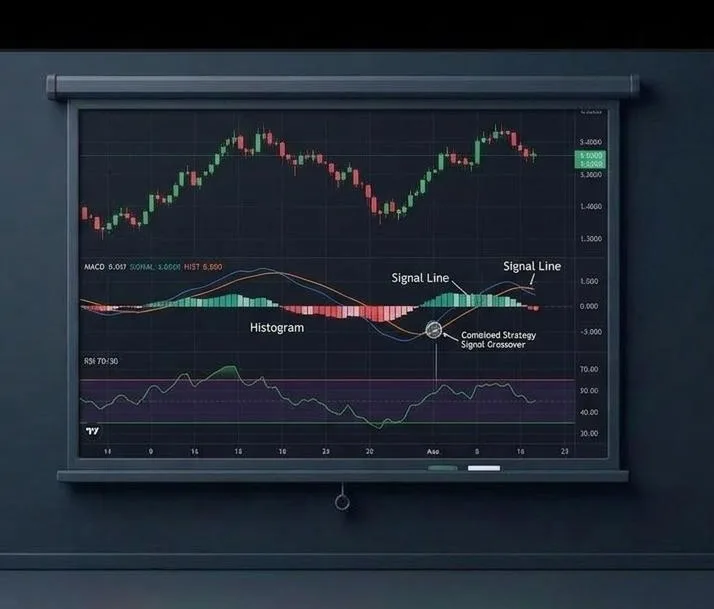
MACD and RSI are both momentum tools, but they describe momentum in different ways. MACD compares two moving averages to show the direction and changing strength of a trend; RSI measures how strong recent closes have been on a scale from 0 to 100. In this sample strategy, MACD sets the direction and RSI times the entry.
Why this setup
A single oscillator gives many signals that contradict the bigger picture. Combining two tools that look at the market from different angles can filter out some of them. The logic is simple: a MACD line above zero points to bullish momentum. Within that context, a dip in RSI to the 40 to 50 area, rather than the classic 30, can mark a pause in a healthy trend. Requiring both conditions cuts the number of trades, and that is exactly the point.
Entry rules
- The MACD line is above zero, meaning the fast average is above the slow one.
- Wait for RSI (14) to pull back to the 40 to 50 area while MACD stays above zero.
- Enter when RSI turns back up and, on the same or the next candle, the MACD line is above its signal line or crosses above it.
- Make sure price has not broken its most recent swing low; if structure has broken, do not buy.
- For shorts, reverse it: MACD below zero, RSI rallies to 50 or 60 and then turns down.
Exit and stop
- Place the stop below the swing low that formed during the RSI dip.
- Take partial profit when RSI reaches 70 or higher.
- Close the rest when the MACD line crosses below its signal line.
- If neither target nor stop is hit after a set number of candles, consider closing; momentum setups that stall often fail.
Risk notes
Both indicators are calculated from price, so they are not independent confirmations; they can agree and still be wrong. Lagging signals may arrive late after sharp moves. Test the settings on the timeframe you actually plan to trade; the defaults are only a starting point.
Important: This is a sample educational strategy, not a buy or sell recommendation. Test every rule first, with a backtest on historical data and then on a demo account, and decide whether to use or adapt it only after you understand how it behaves in different market conditions.
These strategies need testing (backtesting and a demo account) before use. Any buy or sell decision based on them is at your own risk.