The 20-Period Moving Average Pullback Strategy
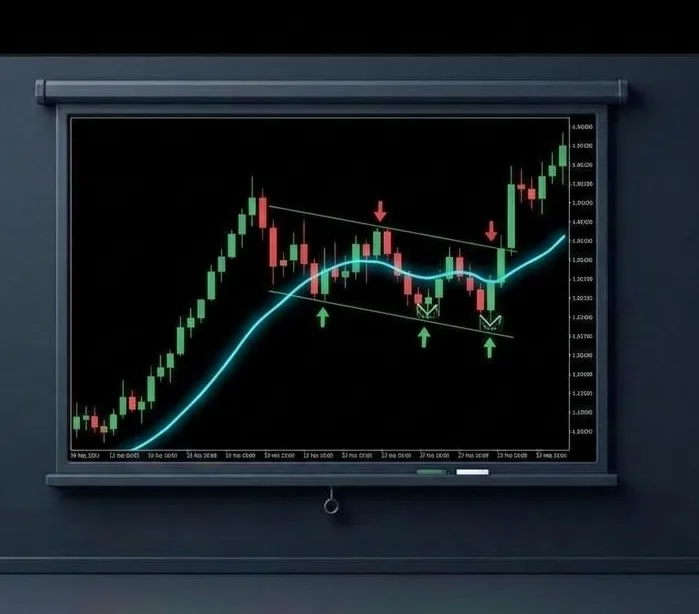
The 20-period moving average follows price closely, which makes it useful for traders who want to join a trend that is already moving fast. This sample setup looks for short, shallow pullbacks to the 20 MA inside a strong trend and treats the average as a guide rather than a wall.
Why this setup
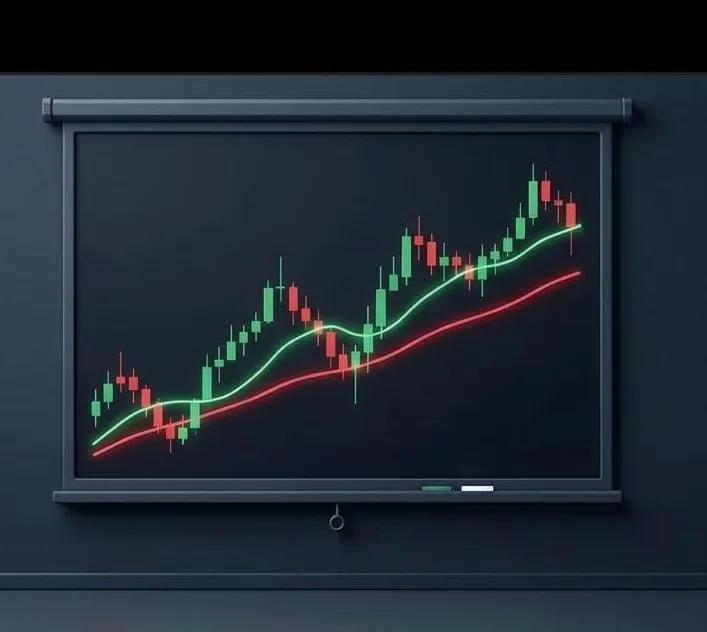
In strong trends, pullbacks are often brief because buyers (or sellers, in a downtrend) are eager to get back in. A deep retracement to the 50 or 100 MA may never come. The 20 MA roughly marks where the last few weeks of trading on a daily chart, or about a day on an hourly chart, have been centred, so a return to it is a natural place for the market to catch its breath. The setup works best when, in an uptrend, the 20 MA sits clearly above the 50 MA, showing that short-term and medium-term direction agree.
Entry rules
- The 20 MA must be above the 50 MA, with both sloping upward.
- Wait for at least two or three candles moving against the trend toward the 20 MA.
- Price should reach the 20 MA zone and then close a candle back in the trend direction.
- Enter when price breaks the high of the last pullback candle.
- Do not enter if the pullback candles are much larger than recent candles; that can mean a real reversal rather than a pause.
Exit and stop
- Put the initial stop below the lowest point of the pullback.
- The first target is the previous swing high; a second target can equal the size of the prior impulse move.
- Move the stop to breakeven once price prints a new high.
- Close the trade if price closes below the 20 MA and then below the pullback low.
Risk notes
Fast averages produce many signals, and in choppy, directionless markets many of them are wrong. Limit yourself to clear trends and never add to a losing position. Major news can turn a tidy pullback into a sharp reversal, so check the economic calendar before entering.
Important: This is a sample educational strategy, not a buy or sell recommendation. Test every rule first, with a backtest on historical data and then on a demo account, and decide whether to use or adapt it only after you understand how it behaves in different market conditions.
These strategies need testing (backtesting and a demo account) before use. Any buy or sell decision based on them is at your own risk.