The Mitigation Block

In smart money concepts (SMC) vocabulary, a mitigation block is an order block that forms during a failed attempt to make a new extreme. Price fails to make a higher high (or a lower low), then breaks structure the other way; the last opposite candles before that break become a zone that price may return to. This sample article explains the idea and a simple way to trade it.
Why this setup
The theory says that traders caught in the failed move hold losing positions and may close them, or "mitigate" them, when price returns to their entry area, adding pressure in the new direction. Whether or not that story is accurate, the pattern describes a familiar structure: a failed swing, a break of structure, then a return to the zone. It differs from a breaker block because price did not run beyond the previous high or low to take the liquidity there.
Entry rules
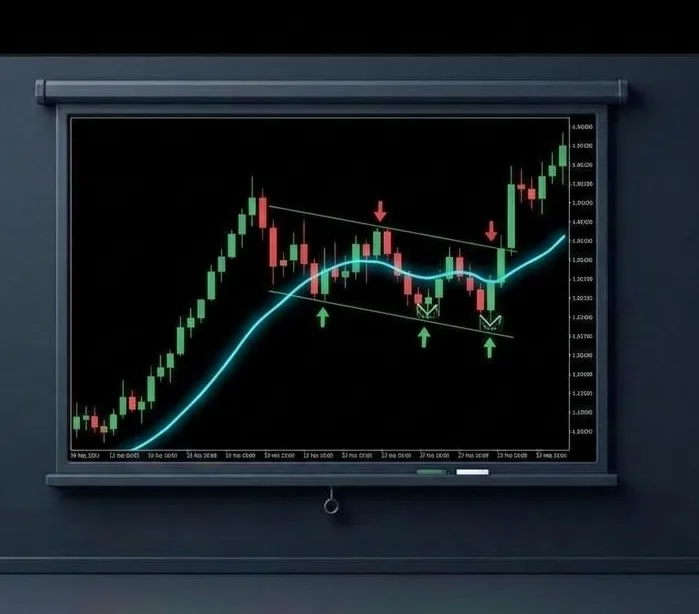
- In an uptrend, price makes a high, pulls back, and then fails to make a new high (a lower high).
- Price then breaks below the most recent higher low: a bearish break of structure.
- Mark the last bullish candle or candles before the drop from the lower high; that is the mitigation block.
- Wait for price to come back into that zone.
- Enter short when a lower timeframe shows a bearish reaction inside the zone.
Exit and stop
- Place the stop above the lower high.
- The first target is the low that created the break of structure.
- The second target is the next liquidity area, such as equal lows.
- The setup is invalid if price closes above the block.
Risk notes
Different educators define SMC terms in different ways; choose one definition and test that one. Not every return to a zone produces a reaction. Always weigh the higher-timeframe context, and do not let this pattern replace risk management.
Important: This is a sample educational strategy, not a buy or sell recommendation. Test every rule first, with a backtest on historical data and then on a demo account, and decide whether to use or adapt it only after you understand how it behaves in different market conditions.
These strategies need testing (backtesting and a demo account) before use. Any buy or sell decision based on them is at your own risk.