Lesson 4 of 7
Account Balance Management
1. What Is Drawdown?
Drawdown refers to the decline in a trading account's balance or equity from a previous peak to a lower level. In simple terms, when a trader's account value decreases after reaching a certain high point, the amount of that decline is called Drawdown.
Drawdown is one of the most important metrics for evaluating a trader's performance and the risk level of a trading strategy. Even a profitable strategy may experience periods of consecutive losing trades or significant reductions in account balance.
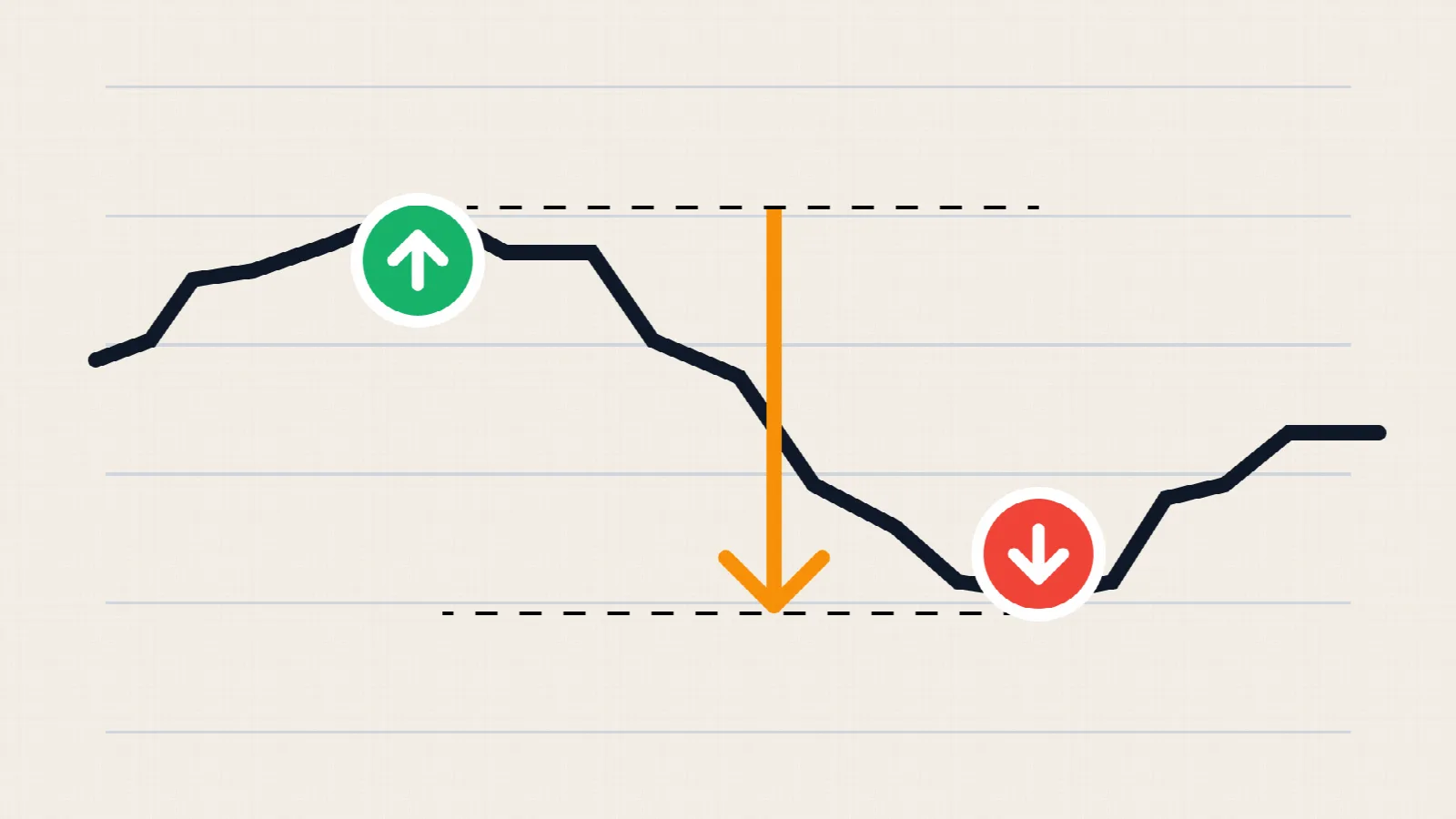
For example, suppose your initial account balance is $10,000. After several successful trades, your capital increases to $12,000. However, after a series of losing trades, your account balance drops to $10,000.
In this situation, your Drawdown is $2,000, or approximately 16.67% of the highest recorded account balance.
Why Is Drawdown Important?
It shows how much capital a trader or strategy may lose during unfavorable trading periods.
It helps traders better understand the actual risk of their trading system.
It is useful for evaluating the long-term stability of a trading strategy.
It helps establish risk limits and determine when trading should be stopped.
It shows how much profit is required to recover from a previous loss.
An important point is that Drawdown does not simply measure losses. It measures the decline in account value relative to a previous peak. Therefore, it should always be considered when evaluating trading account performance.
2. How to Calculate Drawdown
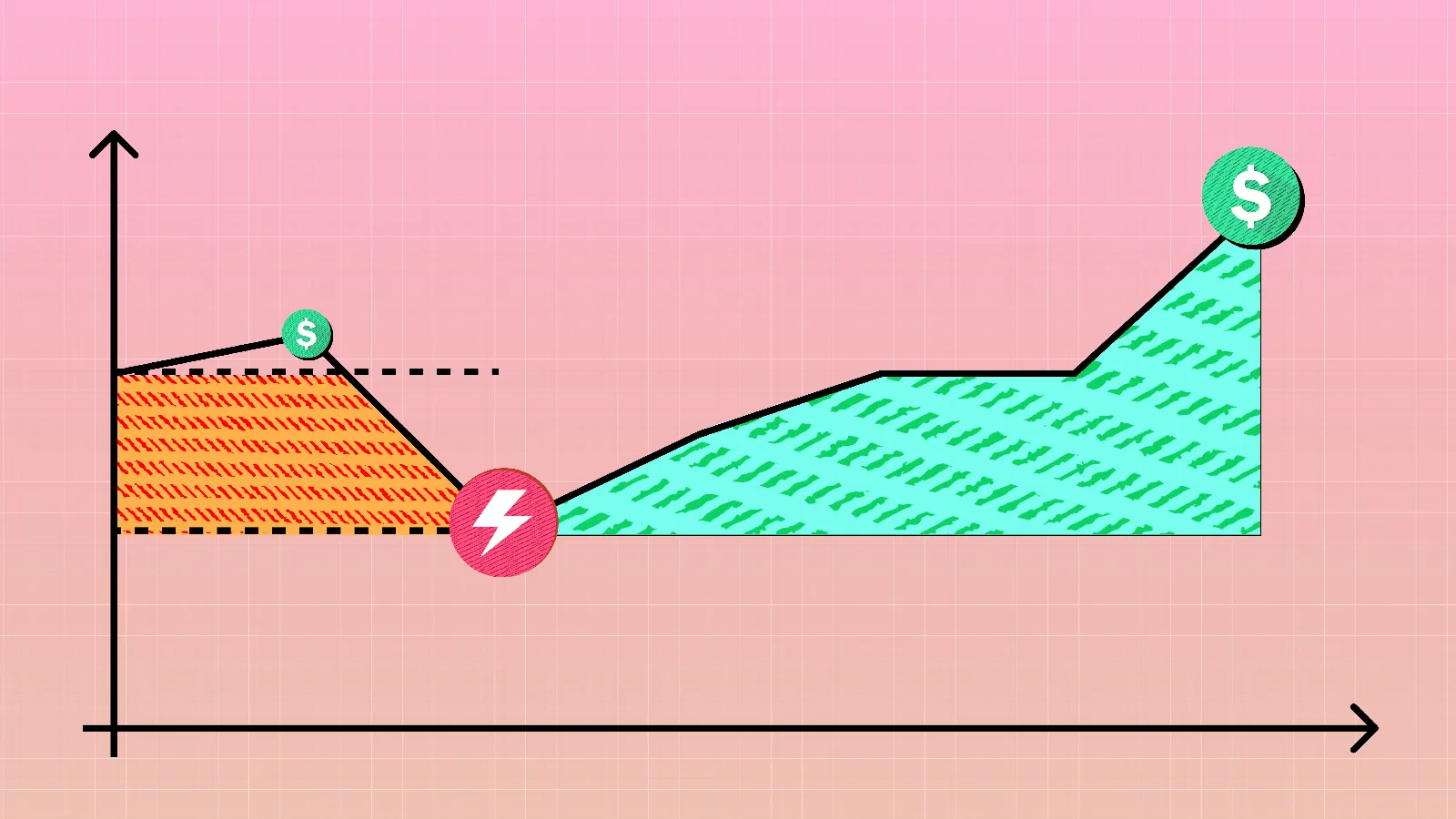
To calculate Drawdown, you first need to identify the highest account balance reached before the decline. Then, calculate the reduction in account value relative to that peak.
Drawdown Percentage Formula:
Drawdown (%) = (Highest Account Balance − Current Account Balance) ÷ Highest Account Balance × 100
Let's look at a practical example.
Practical Example:
Suppose your account balance reaches $10,000 after several successful trades. Following a series of losing trades, your balance decreases to $8,000.
Highest Account Balance: $10,000
Current Account Balance: $8,000
Total Capital Reduction: $2,000
Calculation:
(10,000 − 8,000) ÷ 10,000 × 100 = 20%
Therefore, your account has experienced a 20% Drawdown.
The Relationship Between Drawdown and the Profit Required to Recover Losses
One important concept in account management is that the percentage of profit required to recover a loss is not equal to the Drawdown percentage.
For example, if your account balance is $10,000 and it decreases by 50%, your remaining capital will be $5,000. To return to your original balance, you must generate a 100% profit on the remaining $5,000.
The following table shows how much profit is required to recover from different levels of Drawdown:
Drawdown | Required Recovery Profit |
|---|---|
5% | 5.26% |
10% | 11.11% |
20% | 25% |
30% | 42.86% |
40% | 66.67% |
50% | 100% |
70% | 233.33% |
80% | 400% |
As you can see, the greater the Drawdown, the more difficult it becomes to recover the lost capital.
For this reason, preventing major Drawdowns is far more important than simply trying to achieve large profits.
Types of Drawdown
1. Realized Drawdown: This occurs when trades have been closed and their losses have been recorded in the account balance.
2. Unrealized Drawdown: This occurs when trades are still open, but the account's value decreases because the market moves against the trading position.
When professionally evaluating account performance, it is important to monitor both the account Balance and Equity, which reflects the current account value, including the unrealized profit or loss of open trades.
3. Managing Capital During Consecutive Losses
Consecutive losses are something almost every trader may experience during their trading career. Even a well-designed trading strategy can go through periods in which several trades lose consecutively.
In such situations, the most important priorities are protecting capital and avoiding emotional decisions. Many traders increase their position sizes after experiencing several consecutive losses in an attempt to recover their previous losses quickly. This behavior can increase risk significantly and may even result in losing a large portion of the account.
Ways to Manage Capital During Consecutive Losses:
1. Maintain a Consistent Risk Percentage
After several losing trades, you should not increase your risk in an attempt to recover losses quickly. The risk percentage per trade should remain within a predetermined range.
For example, if you risk 1% of your capital on each trade, you should not increase this amount to 3% or 5% without a logical and well-tested reason.
2. Reduce Position Size During Unfavorable Conditions
If your account's Drawdown exceeds a predefined level, you can reduce your position size to control risk. This ensures that less capital remains exposed if unfavorable market conditions continue.
3. Review Trade Quality
Consecutive losses do not always mean that a strategy is ineffective. Sometimes, market conditions are simply not aligned with the strategy's logic.
Therefore, you should examine whether each trade was executed according to the system's rules.
4. Avoid Revenge Trading
Revenge Trading occurs when a trader enters new positions after experiencing one or more losses, with the intention of recovering lost capital as quickly as possible.
In these situations, traders may increase their position sizes without sufficient analysis or ignore their established entry and exit rules.
The best approach is to step away from the market after experiencing significant losses, review previous trades, and resume trading only according to a clear and predefined plan.
5. Evaluate Trading Strategy Performance
If consecutive losses exceed the normal and expected range of a strategy, its performance should be reviewed.
Market conditions may have changed, the strategy's rules may require adjustments, or trades may not have been executed correctly.
In such situations, it is better to test the strategy using a demo account or historical market data before continuing with real capital.
4. Stop Trading Rules
Stop Trading refers to a set of predefined limits that determine when a trader should temporarily or completely stop trading activities.
The main purpose of these rules is to prevent further losses and protect capital during unfavorable conditions.
Many traders have clear rules for entering the market but do not have a proper plan for situations in which trading conditions become unfavorable. However, having rules for exiting the market is just as important as having rules for entering it.
When Should You Stop Trading?
1. Reaching the Maximum Daily Loss
A trader can establish a daily loss limit. For example, if the maximum daily loss is set at 2% of the account balance at the beginning of the day, no new trades should be opened once this limit is reached.
2. Reaching the Maximum Drawdown Limit
If the account's Drawdown exceeds a predefined level, real trading should be stopped until the strategy's performance and current market conditions have been reviewed.
For example, a trader may decide to stop opening new positions if the account reaches a 10% Drawdown until the strategy has been reassessed.
3. Experiencing Multiple Consecutive Losses
A trader can establish a rule based on the number of consecutive losing trades.
For example, after three consecutive losing trades, all trading activities may be stopped until the end of the day.
However, the acceptable number of consecutive losses depends on the strategy and its backtesting results. Therefore, the same limit should not be applied to every trading system.
4. Changes in Market Conditions
Sometimes, market conditions change in a way that no longer aligns with the logic of a trading strategy.
In such situations, stopping trading and reviewing the system can help prevent additional losses.
5. Lack of Focus and Mental Readiness
Fatigue, anger, anxiety, and emotional decision-making can negatively affect trading performance.
If a trader is not mentally prepared, it is better to stop trading rather than enter new positions.
Important Note: Stop Trading does not mean permanently leaving the financial markets. It is a risk management tool designed to control unfavorable situations and prevent high-risk decisions.
After stopping trading, the reasons behind the losses should be reviewed. Trading should only resume when the market conditions and trading rules have been properly reassessed.
5. How to Prevent Your Trading Account from Being Wiped Out
Losing an entire trading account is one of the biggest risks traders face, especially beginners.
This usually does not happen because of a single mistake. In many cases, it results from a combination of factors such as excessive risk, improper leverage usage, lack of Stop Loss orders, and emotional decision-making.
To protect your trading account, you need a set of clear and measurable rules.
Ways to Prevent Account Wipeout:
1. Limit Risk Per Trade
One of the most important ways to protect your capital is to limit the amount of risk taken on each trade.
For example, depending on your strategy and account conditions, you may set your risk per trade within a range of 0.5% to 1% of your total capital.
This helps preserve a significant portion of your account, even if you experience several consecutive losing trades.
2. Use Stop Loss Orders
Entering a trade without defining a Stop Loss can expose your account to uncontrolled losses.
The Stop Loss level should be determined before entering a trade, and the position size should be calculated based on the distance between the entry price and the Stop Loss.
3. Avoid Excessive Leverage
High leverage allows traders to open larger positions with relatively less margin. However, if the market moves against your position, losses can increase significantly based on the total position size.
Therefore, leverage should be selected carefully and should be appropriate for your position size, Stop Loss distance, and available capital.
4. Avoid Increasing Position Size to Recover Losses
One of the most dangerous trading mistakes is suddenly increasing position size after experiencing a loss.
This behavior is usually motivated by the desire to recover lost capital quickly, but it can significantly increase trading risk.
Position size should always be determined by risk management rules, not emotions or the desire to recover previous losses.
5. Set a Maximum Drawdown Limit
Establish a maximum acceptable Drawdown for your trading account.
For example, you may decide to stop real trading if your account reaches a Drawdown of 10% or 15%, allowing time to review your strategy's performance.
The appropriate limit depends on the type of strategy, risk level, and previous testing results.
6. Record and Review All Trades
Maintaining a Trading Journal allows you to evaluate your performance accurately.
You should record information such as:
Entry Price
Stop Loss
Take Profit
Position Size
Risk Amount
Trade Result
Reason for Entry
By reviewing this information, you can identify repeated mistakes and make better trading decisions.
7. Test Your Strategy Before Using Real Capital
Before implementing a strategy with real money, it is better to evaluate it using historical market data (Backtesting) and a simulated trading account (Demo Trading).
This process helps determine the strategy's Win Rate, average profit and loss, Maximum Drawdown, and overall performance under different market conditions.
8. Pay Attention to Multiple Open Positions
Opening several positions in the same direction or trading assets with high correlations can increase the overall risk of your account.
For example, if you simultaneously open multiple long positions on cryptocurrencies that are highly dependent on Bitcoin's price movements, a market decline may cause all of these positions to experience losses.
Therefore, you should monitor not only the risk of each individual trade but also the total risk exposure of all open positions.
Summary of Part 4
Account balance management is not simply about controlling profits and losses. It also involves planning to protect capital under different market conditions.
Understanding Drawdown, accurately calculating capital declines, managing consecutive losses, and establishing Stop Trading rules can help traders avoid emotional decisions and significant financial losses.
One of the most important principles of trading is to always have clearly defined limits for the amount of risk you are willing to take.
The goal is not to avoid every losing trade. Instead, the goal is to keep losses within manageable limits and preserve enough capital to continue participating in the financial markets.
This content is provided for educational purposes only and does not constitute financial advice or a recommendation to buy or sell any financial asset.
This lesson is for education only and is not a recommendation to buy or sell any asset.