Lesson 5 of 8
Market Profit and Loss Indicators
1. Exchange Inflow
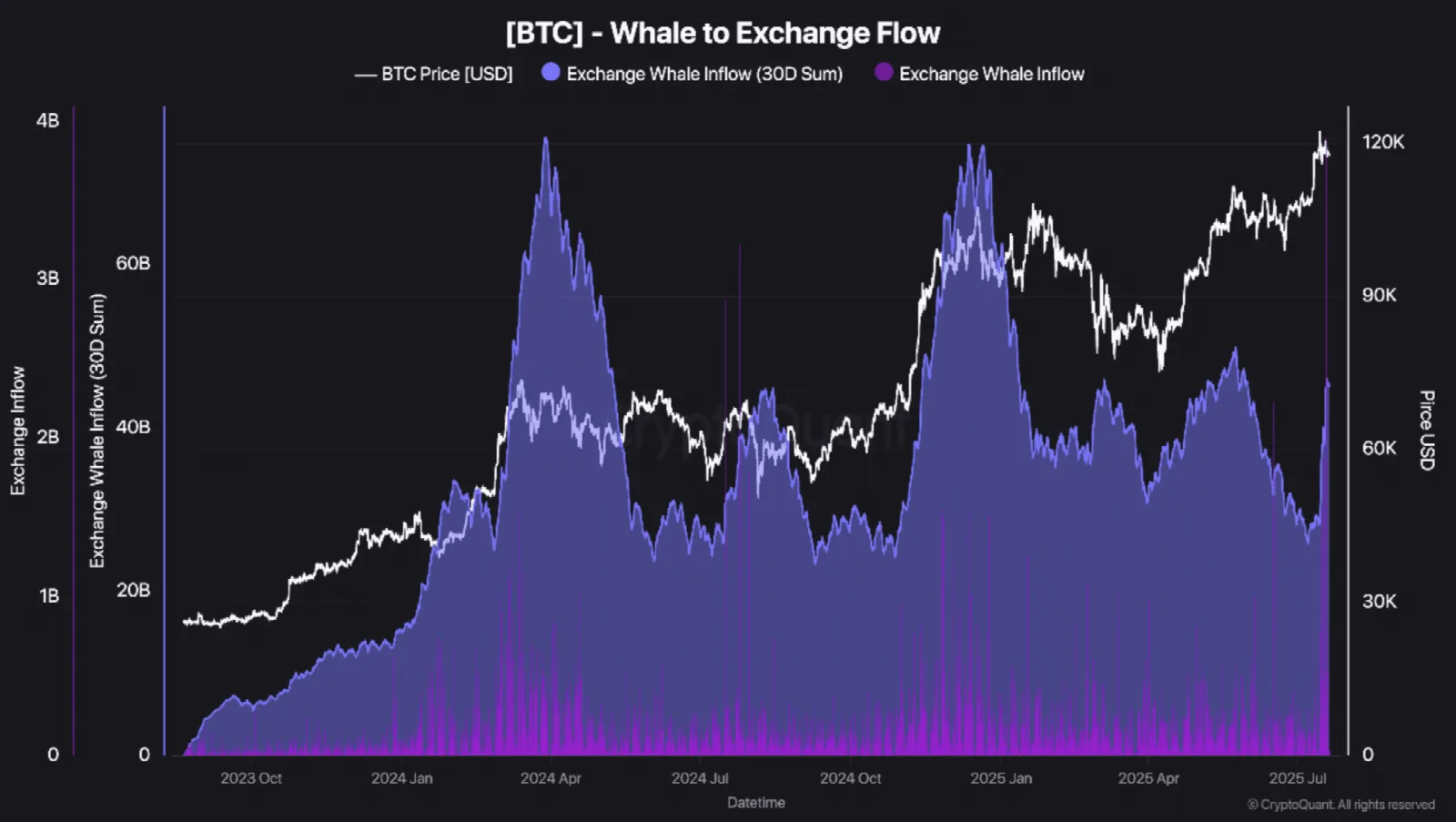
This metric shows how much of a cryptocurrency is transferred into exchange wallets during a specific period. For example, daily Bitcoin exchange inflow is the total amount of Bitcoin deposited into identified exchange addresses that day.
Users may deposit assets to sell, trade, use as collateral, or access exchange services. Therefore, an increase in inflows may indicate that some users are preparing to sell, especially when inflows rise significantly compared with previous days.
However, transferring cryptocurrency to an exchange does not necessarily mean it will be sold. The assets may remain in a user’s account or simply be transferred from another exchange. For a more accurate interpretation, inflows should be examined alongside outflows, price movements, and trading volume.

2. Exchange Outflow
This metric measures how much cryptocurrency leaves exchange wallets during a specific period. These assets may be transferred to personal wallets, other exchanges, or decentralized finance platforms.
When users transfer assets to personal wallets, they may intend to hold them long term or take direct control of their holdings. In such cases, an increase in outflows may indicate a reduction in assets readily available for sale on exchanges, since those assets are no longer held in exchange accounts.
However, not every withdrawal is intended for long-term holding. Transfers between exchanges, the use of other services, or concerns about an exchange’s security can also increase outflows. Therefore, large outflows alone do not indicate new buying activity or guarantee a price increase. The reason for the transfer and its destination matter.
3. Exchange Netflow
Netflow shows whether more of a cryptocurrency entered or left exchanges during a specific period. It is calculated by subtracting outflows from inflows:
Netflow = Inflow − Outflow
A positive result means more assets entered exchanges than left them. For example, if 1,000 BTC enters exchanges and 700 BTC leaves, netflow is positive 300 BTC. A negative result means outflows exceeded inflows. For example, an inflow of 500 BTC and an outflow of 800 BTC produces a netflow of negative 300 BTC.
A significantly positive netflow may indicate an increase in assets available for sale. A negative netflow may suggest that more assets are being moved off exchanges. However, this metric does not reveal users’ reasons for making those transfers.
Also, netflow close to zero does not necessarily mean low activity. Large amounts may have entered and left exchanges in roughly equal quantities. That is why netflow should be reviewed alongside the separate inflow and outflow figures.
4. Exchange Reserves
Exchange reserves refer to the total amount of a cryptocurrency held in identified exchange wallets. For example, Bitcoin exchange reserves show how much Bitcoin is held in those wallets at a specific point in time.
The main difference between this metric and inflows or outflows is that reserves measure holdings, while inflows and outflows measure asset movements. Tracking reserves over time helps show whether exchange balances are increasing or decreasing.
Rising reserves may indicate that more assets are available for trading or selling. Falling reserves may result from users withdrawing assets and transferring them to personal wallets. However, neither change alone guarantees a rise or fall in price.
Importantly, exchange wallet balances typically include users’ assets and should not be treated solely as assets owned by the exchange itself. Large reserves of a cryptocurrency are also insufficient on their own to assess an exchange’s financial health or its ability to meet its obligations.

5. Stablecoin Inflow & Outflow
These metrics show how much of stablecoins such as Tether (USDT) and USDC enters or leaves exchanges during a specific period. Stablecoins are designed to maintain a value close to a reference asset, usually the U.S. dollar, and are widely used for trading and transferring funds in the cryptocurrency market.
An increase in stablecoin inflows may indicate that more funds are available to buy cryptocurrencies. For example, users may deposit USDT into an exchange to purchase Bitcoin or other assets. However, those funds may also be used for other trades, collateral, or exchange services and may not immediately be used for purchases.
Stablecoin outflows may indicate transfers to personal wallets, other exchanges, or decentralized finance platforms. Therefore, stablecoins leaving one exchange do not necessarily mean that funds are leaving the cryptocurrency market as a whole or being converted into fiat currency.
For a more complete analysis, stablecoin flows can be examined alongside Bitcoin and other cryptocurrency flows. For example, stablecoin inflows combined with Bitcoin outflows may be consistent with users buying Bitcoin and then withdrawing it. However, these two metrics alone do not prove that this has occurred.
General note: These figures are based on identified exchange addresses and may vary between data providers. Internal exchange transfers and changes in address identification can also affect the data. It is better to examine trends over several days or longer periods rather than focusing only on a single day’s changes. None of these metrics alone provides a definitive buy or sell signal.
Disclaimer: This material has been prepared solely for educational purposes and to increase awareness of the cryptocurrency market. It does not constitute a recommendation to buy or sell any digital asset. Conduct your own independent research before making any financial decisions.
This lesson is for education only and is not a recommendation to buy or sell any asset.